Materials that get better with time
Oak, steel, stoneware, wool. A note on the materials we choose, how they age, and why a scratch is not always a flaw.
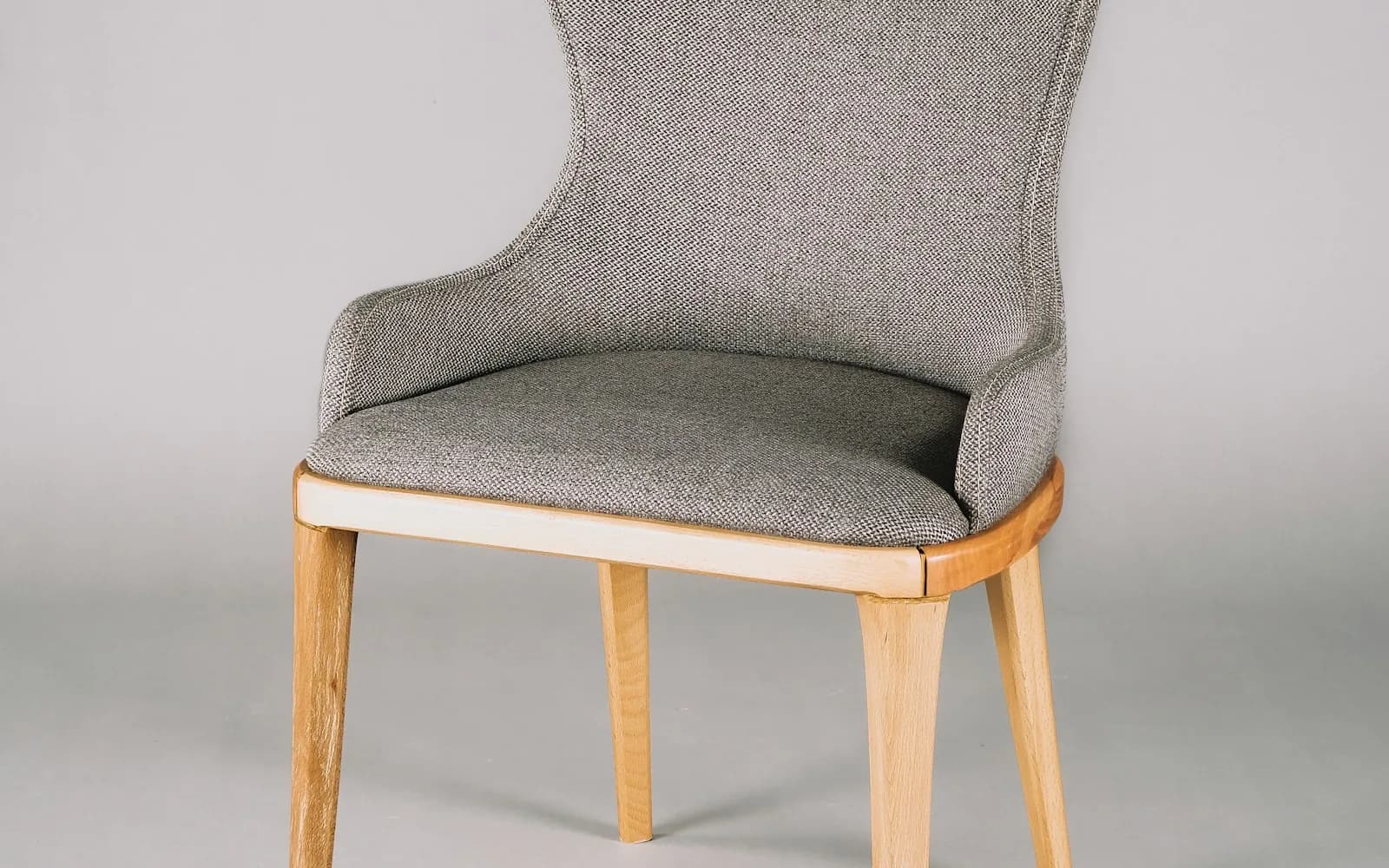
A grey upholstered chair with an oak frame on a pale background
There are two kinds of aging. The first is deterioration: a veneer that lifts, a coating that flakes, a hinge that loosens. The second is patina: the way oak darkens where hands rest, the way brass dulls, the way a wool seat softens into the shape of the person who uses it most. We are interested in the second kind.
Oak
We use kiln-dried white oak for frames and legs, finished with a hardwax oil rather than a plastic lacquer. The oil sits in the grain instead of on top of it, so the wood still feels like wood. It also means the surface can be repaired. A scratch can be sanded and re-oiled; a chipped lacquer cannot.
Oak will change color. In direct sun it lightens; in a dim room it warms. This is not a defect. It is the material keeping a record of the room.
Steel
Powder-coated steel is one of the most practical materials in a working room: it does not mind a wet glass, it holds a magnet, and it can be recycled at the end of a long life. The coating is baked on, so it resists chipping far better than paint. Where it does wear — usually at an edge you touch every day — the metal underneath is dull rather than rusty, because the coat is doing its job.
“A scratch is a record, not a failure — as long as the object was made to be repaired.”
Stoneware
Every mug and planter is glazed by hand, which means no two are identical. The glaze pools slightly where the form curves and breaks thinner at the rim. These are the marks of the process, not mistakes. Stoneware is fired high enough to be dense and non-porous, so it can go in the dishwasher and the microwave without a ritual.
Wool and bouclé
A wool-blend bouclé is forgiving in a way that flat weave is not. The loops hide the small stuff — a pen mark, a bit of dust — and the fibers recover their shape after a day of sitting. Vacuum gently, blot rather than rub, and let it be. The chair will look better in a year than it does in the showroom, provided it is used.
The point of choosing materials that age well is not nostalgia. It is a simple calculation: an object you keep for ten years costs less, in money and attention, than three objects you replace.
Written by
Morrow Studio